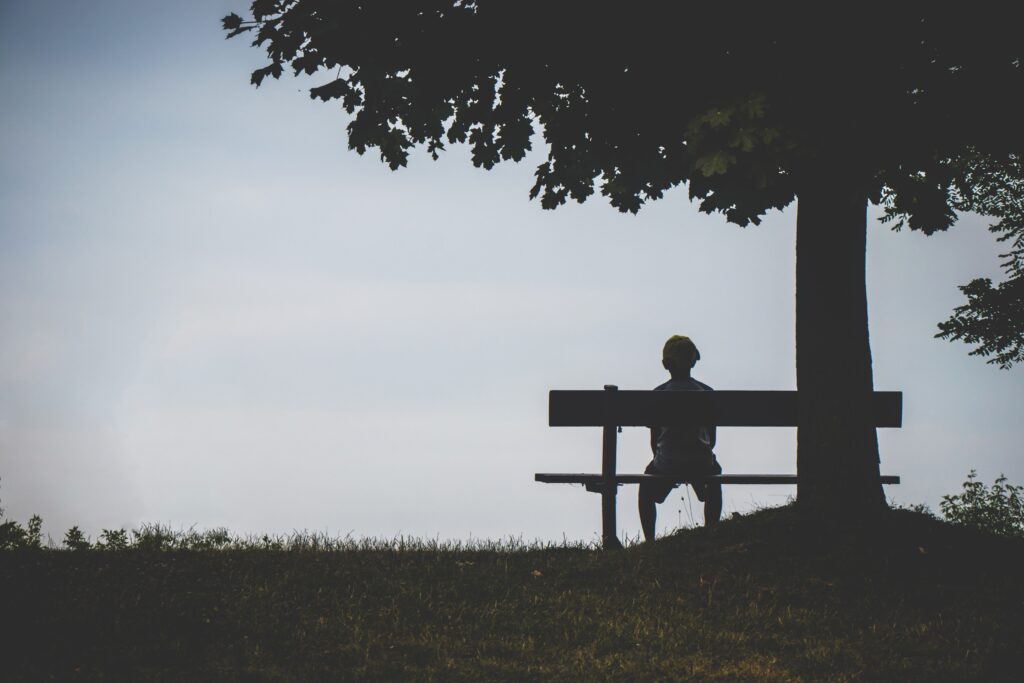
If you’ve never spent an extended period of being alone, you’re doing yourself an enormous disservice.
Many of us don’t like being alone.
I’m guessing that most of us don’t.
After all, we’re human beings, and human beings are “social creatures.”
We like to be around other people.
I’m not saying that you should be alone forever.
What I am suggesting is that a prolonged period of 1–2 years of solitude can have an enormous positive impact on your life.
I experienced the benefits of being alone for nearly two-and-a-half years after the end of a long-term relationship.
For most of my adult life, I’ve been in long-term relationships.
I was married for nearly 15 years, and soon after my divorce, I found myself in another relationship that lasted for almost nine.
During those 24 years, I was surrounded by people pretty much all the time.
While I was married, it was my wife and kids, and while I was in the relationship after my divorce, it was my girlfriend and her daughter, who had moved into my house, and my kids.
For those 24 years, my house was full of people and fast-paced activity.
When that relationship ended in mid-2020 and my ex-girlfriend and her daughter moved out, it began a progression of fewer people being around me.
Soon, my son would leave for boot camp, and a year later, my daughter was on her way to college.
Now, it was just me in the house.
No more kids coming and going, no more doors slamming, and no more constant background noise.
All of a sudden, my 1,500-square-foot house, which, at times, felt like it could barely contain everyone, seemed too big.
We’re Not Designed To Be Alone
Feelings of loneliness and isolation have become such a pervasive issue in our country that the U.S. Surgeon General recently issued a national health advisory.
According to U.S. Surgeon General, Dr. Vivek Murthy, the country is experiencing an “epidemic of loneliness and isolation.”
In recent surveys, Murthy said one-in-two adults reported experiencing loneliness, and this was before the Covid-19 pandemic forced us all to sever connections with family members, friends, and colleagues.
According to Murthy, social connection is as vital to our well-being as food, water, and shelter.
As humans, our need for social interaction and human connection has been well-documented.
During the months and weeks leading up to my son leaving for boot camp, I remember feeling a growing anxiety.
It was a combination of worrying about his welfare, wondering if he would make it through, and realizing that he would likely never be in the house full-time again.
While my son leaving left a massive void in the house, it wasn’t until my daughter left for college that I began to realize what my new reality would be like.
While work occupied my days, silence now filled my nights.
I can remember sitting on my couch one evening thinking, “So this is what it feels like to be alone.”
Reframing Loneliness
While I’ve always favored calm and silence over non-stop activity and noise, things were now too quiet for my liking.
I knew that I needed to occupy my evenings by doing something productive rather than dwelling on my loneliness.
Since binge-watching Netflix didn’t quite fit the bill, I decided to rekindle my passion for reading, which I’d regrettably allowed to wane over the years.
Although reading didn’t mitigate the silence surrounding me, it represented something else.
By scheduling time to read every night, I was reinvesting in myself, something I had ignored for a long time.
I’d spent the past two decades managing relationships, raising my kids, and ensuring everyone else was being taken care of.
I now had a chance to focus on myself.
My new reading routine also inspired and motivated me to write my book, and once I made that decision, I began viewing silence and being alone as valuable commodities.
While the house remained quiet, and I still had episodes of loneliness, they were more fleeting, and I was able to dismiss them.
It enabled me to reevaluate my new environment and reposition it in a much more positive light.
Powerful Advantages Of Loneliness
I realize that, for many, loneliness can be difficult, scary, and in extreme cases, debilitating and even lead to mental illness and depression.
But, there are ways to overcome feelings of loneliness and use them to improve yourself and potentially achieve things you never thought possible.
You can manage loneliness by getting involved in new activities, joining a club, volunteering your time, rekindling old friendships, or just going for walks in a local park where you’ll be around other people.
In addition to reading, I also began taking regular hikes, another activity I’d always enjoyed but found myself engaging in less and less over the years.
Although I was by myself on hikes, smiling and saying hello to other hikers gave me a sense of community and helped me feel like I was around other people.
If you can remove yourself from your “lonely space” by participating in other activities, it might allow you to begin viewing being alone in a more positive and productive light.
The longer I’ve been by myself, the more comfortable I’ve become with being alone.
While it took time and effort, I’ve been able to rework loneliness into an advantage and something with powerful self-improvement benefits.
If you’re alone and struggling to manage feelings of loneliness, try to reimagine it.
Rather than focusing on being lonely, embrace it and use it as a tool for self-improvement.
You might even put yourself on an exciting new trajectory.
Here are the five benefits that I’ve experienced during my extended time being alone:
- Increased self-awareness — Spending time alone can help you better understand yourself. You can reflect on your thoughts and feelings without distractions, which can lead to greater self-awareness and insight.
- Improved creativity — Solitude can also enhance creativity by allowing you to explore new ideas.
- Reduced Stress — Being alone can be a form of self-care that helps to reduce stress and anxiety. It allows you to unwind and recharge, which can help you cope with the challenges of daily life.
- Increased Productivity — Being alone gives you the freedom to focus on your work or personal projects without interruption, which can lead to increased productivity and a greater sense of accomplishment.
- Greater Independence — Spending time alone can help you become more self-sufficient and confident. You learn to rely on yourself for entertainment and fulfillment, which can lead to greater independence and self-reliance.
Get My FREE Bonus Content!
Sign up to receive my “New Healthy Routine Cheat-Sheet and Common Pitfalls of Starting a Healthy Routine”.